
Synthetic Teak vs. Real Teak Boat Decking
Real teak and synthetic teak can create a similar visual language, but they are fundamentally different materials.
Real teak is natural hardwood with genuine grain, weathering and traditional yacht heritage.
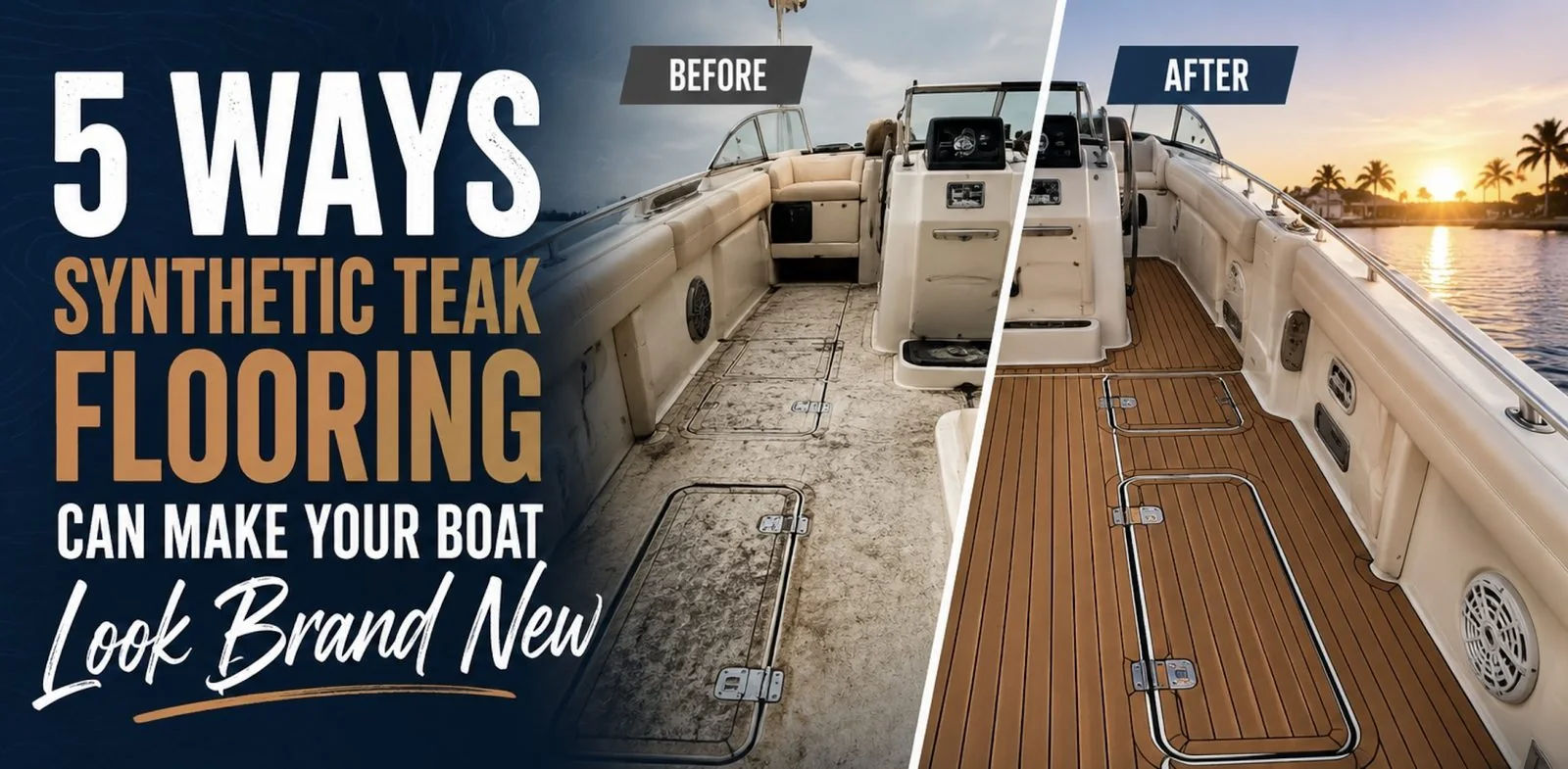
Synthetic teak is manufactured marine decking designed to create a controlled plank-and-caulking appearance without installing a natural wood deck.
For the right owner, either can be an excellent choice.
The Short Answer
Choose real teak if
- Authentic natural wood is essential
- Natural variation matters
- Traditional craftsmanship matters
- You accept the care requirements of wood
- Budget supports marine carpentry and ongoing ownership
Consider synthetic teak if
- You want teak-inspired styling
- Consistent color matters
- You don’t want a natural-wood refinishing routine
- Custom manufactured panels appeal to you
- You want broad color and caulking options
Key takeaways
- Synthetic teak aims for teak-inspired styling with a different maintenance routine than natural teak.
- Real teak has natural wood character and the care expectations of genuine wood.
- Choose based on appearance goals, maintenance preference, craftsmanship needs, and budget.
| Consideration | Real teak | Synthetic teak |
|---|---|---|
| Material | Natural hardwood | Manufactured marine decking |
| Authenticity | Genuine wood | Designed to create a teak-inspired appearance |
| Appearance | Natural grain and individual variation | Controlled color, plank and caulking options |
| Aging | Natural weathering and character change over time | Appearance depends on product, color, exposure and care |
| Maintenance | Wood-specific care based on desired finish and guidance | Product-specific cleaning without natural-wood refinishing |
| Refinishing | May involve sanding, sealing or oiling depending on goals | Does not follow a natural-teak refinishing routine |
| Customization | Traditional woodworking and deck patterns | Fabricated colors, caulking, borders, panels and details |
| Heat | Depends on weather, moisture, finish and exposure | Depends on color, product, weather and exposure |
| Wet grip | Depends on finish, wear, contaminants and conditions | Depends on product texture, contaminants and conditions |
| Installation | Specialized marine carpentry and fastening or bonding | Measurement, fabrication, preparation and approved bonding system |
| Weight | Depends on thickness, construction and substrate | Depends on product thickness and installation method |
| Cost structure | Often a high-cost material and skilled-labor category | Varies by product, design, fabrication and installation scope |
| Repair | Woodworking and deck-repair methods | Often panel- or section-specific depending on fabrication |
| Environmental considerations | Depend on sourcing, lifespan, maintenance and end-of-life factors | Depend on manufacturing, lifespan, maintenance and end-of-life factors; Flexiteek states Flexiteek 3 uses bio-attributed PVC |
Material
- Real teak
- Natural hardwood
- Synthetic teak
- Manufactured marine decking
Authenticity
- Real teak
- Genuine wood
- Synthetic teak
- Designed to create a teak-inspired appearance
Appearance
- Real teak
- Natural grain and individual variation
- Synthetic teak
- Controlled color, plank and caulking options
Aging
- Real teak
- Natural weathering and character change over time
- Synthetic teak
- Appearance depends on product, color, exposure and care
Maintenance
- Real teak
- Wood-specific care based on desired finish and guidance
- Synthetic teak
- Product-specific cleaning without natural-wood refinishing
Refinishing
- Real teak
- May involve sanding, sealing or oiling depending on goals
- Synthetic teak
- Does not follow a natural-teak refinishing routine
Customization
- Real teak
- Traditional woodworking and deck patterns
- Synthetic teak
- Fabricated colors, caulking, borders, panels and details
Heat
- Real teak
- Depends on weather, moisture, finish and exposure
- Synthetic teak
- Depends on color, product, weather and exposure
Wet grip
- Real teak
- Depends on finish, wear, contaminants and conditions
- Synthetic teak
- Depends on product texture, contaminants and conditions
Installation
- Real teak
- Specialized marine carpentry and fastening or bonding
- Synthetic teak
- Measurement, fabrication, preparation and approved bonding system
Weight
- Real teak
- Depends on thickness, construction and substrate
- Synthetic teak
- Depends on product thickness and installation method
Cost structure
- Real teak
- Often a high-cost material and skilled-labor category
- Synthetic teak
- Varies by product, design, fabrication and installation scope
Repair
- Real teak
- Woodworking and deck-repair methods
- Synthetic teak
- Often panel- or section-specific depending on fabrication
Environmental considerations
- Real teak
- Depend on sourcing, lifespan, maintenance and end-of-life factors
- Synthetic teak
- Depend on manufacturing, lifespan, maintenance and end-of-life factors; Flexiteek states Flexiteek 3 uses bio-attributed PVC
Real Teak Is Real Wood—and That Matters
Do not minimize its appeal.
Natural teak provides genuine wood grain, individual variation, natural aging, longstanding marine tradition, skilled carpentry and a material character synthetic products intentionally imitate.
For an owner who values material authenticity above all else, genuine teak may remain the preferred choice.
Why Owners Consider Synthetic Teak Instead
Synthetic teak can appeal to owners who want the visual structure of a teak deck without adopting the same natural-wood care routine.
- Controlled color
- Consistent material
- Multiple caulking options
- Custom fabricated panels
- No traditional teak sanding/oiling requirement
- Ability to choose more contemporary colors
Maintenance Differences
Actual teak care varies based on desired appearance, deck construction, condition and manufacturer or builder guidance.
Real teak can weather naturally or be maintained to a specific finish. It does not always have to be oiled.
Synthetic teak does not require natural-wood refinishing but still requires appropriate cleaning and care.
What About Sustainability?
Environmental considerations depend on sourcing, manufacturing, lifespan, maintenance and end-of-life factors.
Do not treat synthetic teak as automatically greener than teak, and do not claim that real teak is environmentally irresponsible.
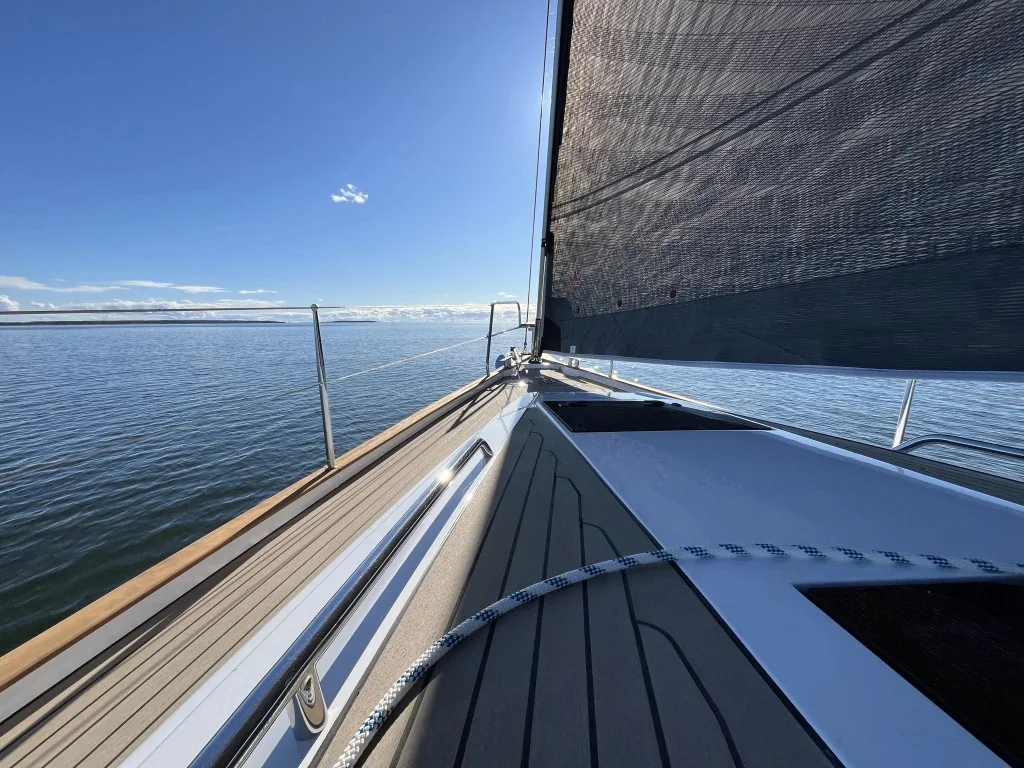
Flexiteek states that Flexiteek 3 uses bio-attributed PVC and was developed to reduce reliance on fossil-fuel-derived PVC. That manufacturer statement should not be extrapolated into an unsupported complete life-cycle superiority claim.
Traditional Doesn’t Have to Mean Brown
One interesting advantage of synthetic decking is broader design freedom.
Explore traditional teak-inspired tones, weathered looks, contemporary finishes and Tritone options on the Flexiteek colors page.

Which Is Right for Your Boat?
Choose based on authenticity, appearance, maintenance preference, boat type, existing materials, design, installation scope, budget and long-term ownership.
Cruiser and yacht owners can also review cruiser and yacht decking.
Synthetic Teak vs Real Teak FAQs
Is synthetic teak real wood?
No. Synthetic teak is manufactured marine decking designed to create a teak-inspired plank-and-caulking appearance.
Does synthetic teak need oil?
Synthetic teak does not follow a natural-teak oiling routine. Follow the manufacturer’s current care guidance for the installed product.
Does real teak have to be oiled?
Not always. Real teak care depends on the desired appearance, construction, condition and guidance. Some owners allow natural weathering; others maintain a specific finish.
Is Flexiteek cheaper than real teak?
It depends on the project. Real teak often involves premium material and skilled marine carpentry. Synthetic teak project cost varies with design, fabrication, preparation and installation. Compare complete written estimates.
Which gets hotter?
Surface temperature depends on color, weather, moisture, finish or product formulation, sun exposure and other conditions—not a simple category winner.
Which lasts longer?
There is no responsible universal lifespan winner. Construction, installation, exposure, use and care all matter. Compare the specific product documentation and ownership expectations for your boat.