Custom Flexiteek Boat Deck Design
Choosing Flexiteek is only the beginning.
The details determine whether the finished flooring looks like an aftermarket addition—or like it was designed with the boat from day one.
Plank direction, borders, caulking, hatches, curves, transitions and custom details can all influence the final appearance. Wave Maker Craft helps owners turn those choices into a coordinated marine-flooring design.
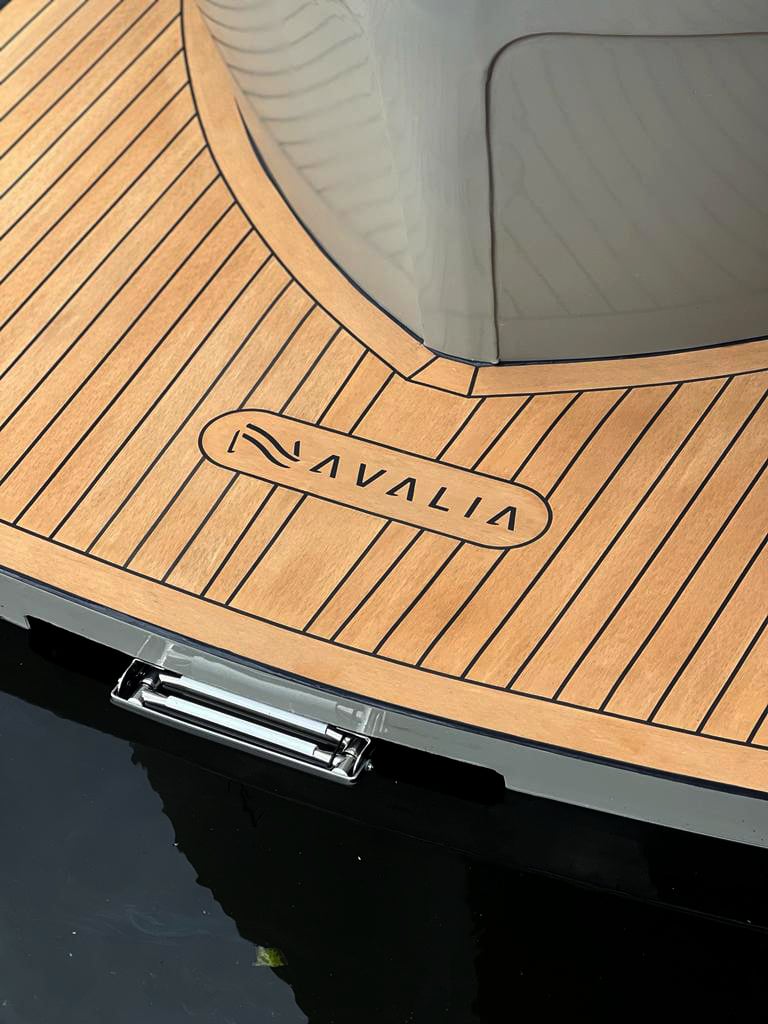
Flexiteek Design Inspiration
A Great Deck Follows the Boat
A flooring layout should work with the geometry of the vessel.
Strong design considers natural centerlines, bow-to-stern direction, layout shape, swim-platform shape, hatches, helm geometry, seat bases, steps, curves, drains, hardware, panel breaks and adjacent surfaces.
The deck should visually explain the shape of the boat rather than fight it.
Plank Direction
Plank orientation affects how long, wide or directional a deck area feels.
Longitudinal
Planks follow the length of the boat and can emphasize vessel length and natural movement fore and aft.
Transverse / Alternative
May work on specific platforms, steps or defined accent areas. The shape of the application determines the design—there is no universal rule.
Borders & Margin Boards
Borders frame flooring zones and help finish the deck.
- Define deck areas
- Resolve irregular geometry
- Highlight platform shape
- Separate planks from boat hardware
- Create more finished transitions
Caulking Changes Everything
Black, gray and white caulking each change contrast and perceived style. Explore current combinations on the Flexiteek colors page.
Designing Around Hatches
Hatches are one of the clearest differences between generic flooring and thoughtful marine-floor design.
Design may need to consider hatch perimeter, plank continuity, opening direction, hinges, latches, hardware, drainage and removal or service access. The goal is visual alignment without compromising practical access.
Cockpit + Swim Platform Design
These areas often benefit from being considered together even when they are not installed at the same time.
Planning common deck color, caulking, plank proportion, direction and borders can make future expansion look coordinated.
Logos, Lettering & Custom Details
Custom design possibilities depend on artwork, size, material, fabrication requirements and project scope.
Where current fabrication capability and project scope support it, custom details may include boat name, logo, lettering, compass-style motif, graphic feature or custom border pattern.
Traditional or Modern?
Traditional
Possible direction: teak-inspired colors, black caulking, classic plank layout and strong borders.
Modern
Possible direction: lighter or gray deck, gray or white caulking, cleaner geometry and contemporary upholstery coordination.
These are design directions, not rules.
Your Boat Is the Design Brief
You do not need to design the deck yourself.
To start design planning, send overall boat photos, cockpit photos, platform photos, upholstery, hull color, existing deck, inspiration images, preferred colors and areas being upgraded.